
Having a Spouse With Chronic Illness
Writing something this personal is new for me. I am not used to sharing my thoughts in a public way, especially about something that affects someone I love as deeply as this does. But when Karen asked if I would write about what it is like having a spouse with chronic illness, I realized how important it might be for others to hear this side of the story.
When people talk about chronic and hidden illness, the focus is usually on the person who lives with the condition. That makes sense. They are the ones dealing with the pain, the medications, and the daily reality of symptoms most people cannot see.
But chronic illness is rarely something one person carries alone. It affects relationships and routines. It changes the way life is planned and experienced together.
When you are having a spouse with chronic illness, the illness becomes part of your shared life. It requires more awareness, more flexibility, and sometimes more patience. But what it has never required is less love.
If anything, it has taught me how to love more intentionally.
Having a Spouse With Chronic Illness Changes How You Plan Life Together
Karen has Complex Regional Pain Syndrome, often called CRPS and previously known as RSD and learning how it would affect our life together has been an ongoing process.
One of the biggest differences I noticed compared to previous relationships was how we plan things. In the past, I never had to think too much about whether a full day of activities might be too physically demanding for someone I was dating. I could plan a long outing, a trip, or a busy schedule without much thought.
Having a spouse with chronic illness means thinking differently about time, energy, and pacing.
For example, we recently took a trip to Boston. Karen was excited about seeing family and friends and experiencing the city. At one point she suggested scheduling a four-hour cruise in Boston Harbor, meeting a friend for lunch afterward, then traveling across the city to meet her nephew for another cruise and dinner.
When we talked through the day together, I realized how demanding it would be for her body.
Instead of trying to fit everything into one day, I suggested spreading those experiences out over several days. We took the longer cruise one day, met our friend for lunch the next day, and planned a Duck Tour through the city with her nephew on a third day.
That is part of having a spouse with chronic illness. Plans sometimes need to change, activities need to be paced and breaks need to be built in. It does not mean we do less, it simply means we do things differently.
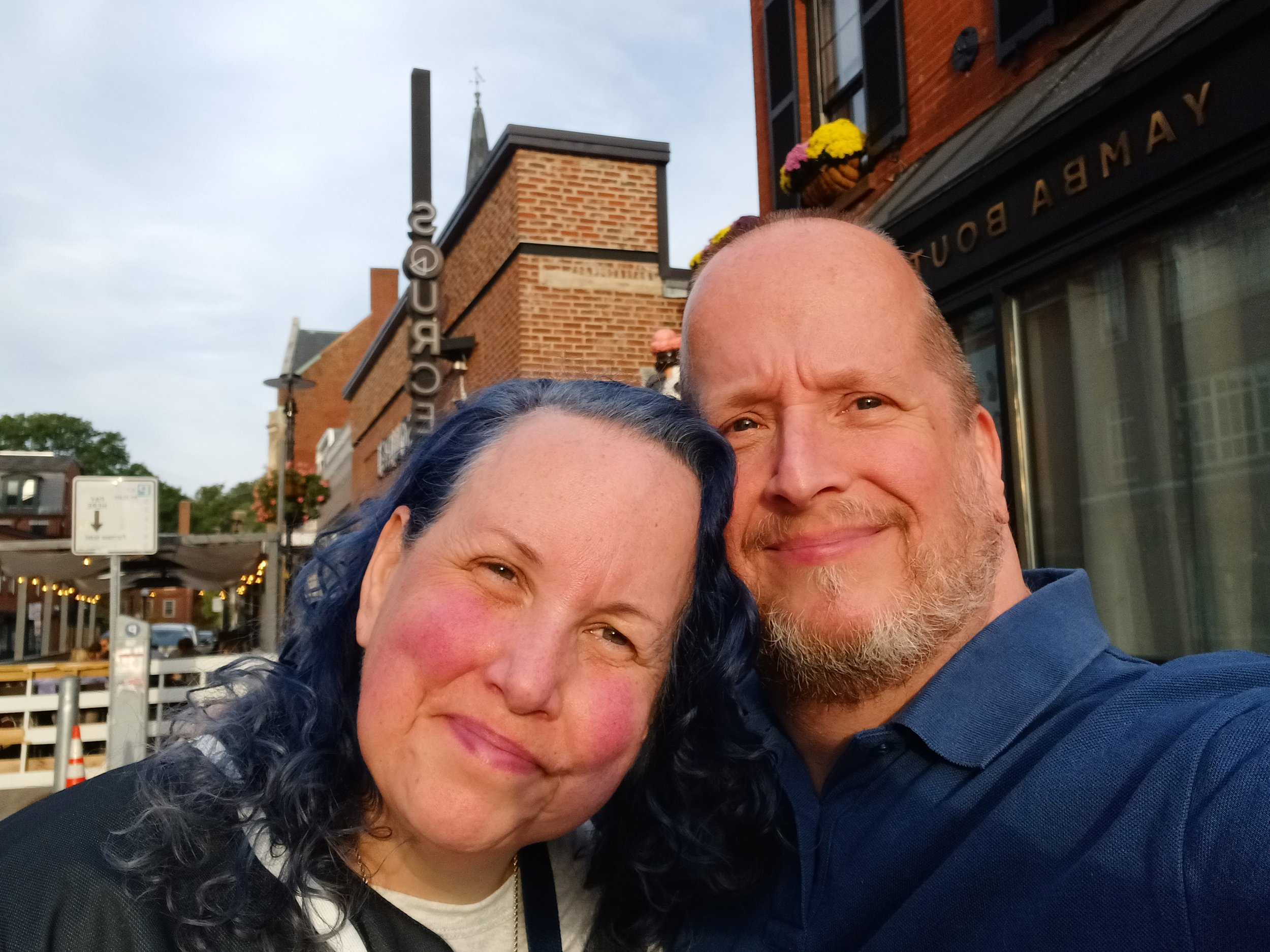
Us in Boston
Intimacy and Connection When You Are Having a Spouse With Chronic Illness
People sometimes assume that chronic illness dramatically changes intimacy in a relationship. In some ways, there are adjustments, but the core of our connection has remained the same.
Most of the things Karen and I share together are not that different from what I experienced in previous relationships. What has changed is the level of awareness and intention that goes into those moments.
Because of Karen’s sensitivity to touch due to CRPS, I have learned to pay closer attention to how my actions affect her body. I began learning this through something as simple as giving her back and shoulder massages. Over time, I realized that softer, more thoughtful touch worked better for her than the deeper pressure techniques I had learned when studying massage therapy.
That awareness carried into other parts of our relationship as well. I learned to pay attention to her pain threshold, to check in more often, and to adjust when something that felt fine before might suddenly become uncomfortable.
Having a spouse with chronic illness means intimacy becomes a shared learning process. It requires communication, patience, and being willing to adapt together.
Love Grows Through Awareness
Living with chronic illness does require extra awareness. It requires noticing when your partner is tired even if they do not say it out loud. It requires planning around energy levels, symptoms, and medical realities that other couples may never have to consider.
But the one thing it has never required is less love.
If anything, having a spouse with chronic illness has deepened the way I think about partnership. It has taught me that love is not just about shared interests or easy moments. It is about showing up with understanding, flexibility, and care for the person beside you.
And if there is one thing I have learned through all of it, it is this:
Chronic illness may change the way life looks.
But it never changes the reason you choose each other.